Short answer: My June 2020 Model 3 has occasionally not closed properly, but I have not had a major trunk or frunk problem. I also had the trunk cable/harness reinforcement carried out under recall and have had no problems with it so far. That recall concerns the wiring and rearview-camera feed; it is not a latch repair.
Closing checks · Close the frunk correctly · My harness recall · Leaks and struts
My experience: June 2020 Model 3, HW3, 76,000+ miles. Occasional incomplete closing and the completed trunk-harness recall work are my owner account. The photographs show my car.
Official guidance: the closing instructions and recall explanation below come from Tesla.
Trunk and frunk: free checks versus service
| Symptom | First action | When service is needed |
|---|---|---|
| Frunk will not latch | Clear obstructions; use Tesla two-hand closing method | Correct technique still fails; visible misalignment |
| Rear trunk bounces or stays open | Check cargo/liner and closing path | Repeat failure or persistent open warning |
| Water appears inside | Photograph first wet area; inspect visible seal and debris | Persistent leak or damaged seal |
| Lid will not stay up | Keep clear of unsupported lid | Support/hinge inspection before more use |
| Rear camera flickers on affected older car | Check VIN and trunk-harness recall history | Recall remedy / wiring diagnosis separately from latch repair |
When the trunk or frunk has not closed properly
I have had occasions when it did not close properly. The useful first distinction is whether the closure simply has not caught or repeatedly refuses to stay latched.
- Stop before driving: confirm the lid is securely latched. Do not rely on its appearance alone.
- Look for an obvious obstruction: a bag, strap, liner or cargo edge may be in the closing path. Keep hands clear of the latch and hinges.
- Use the correct closing method: the front hood and the rear trunk need different handling.
- If it still will not latch: arrange service rather than repeatedly slamming it or adjusting the striker by guesswork.
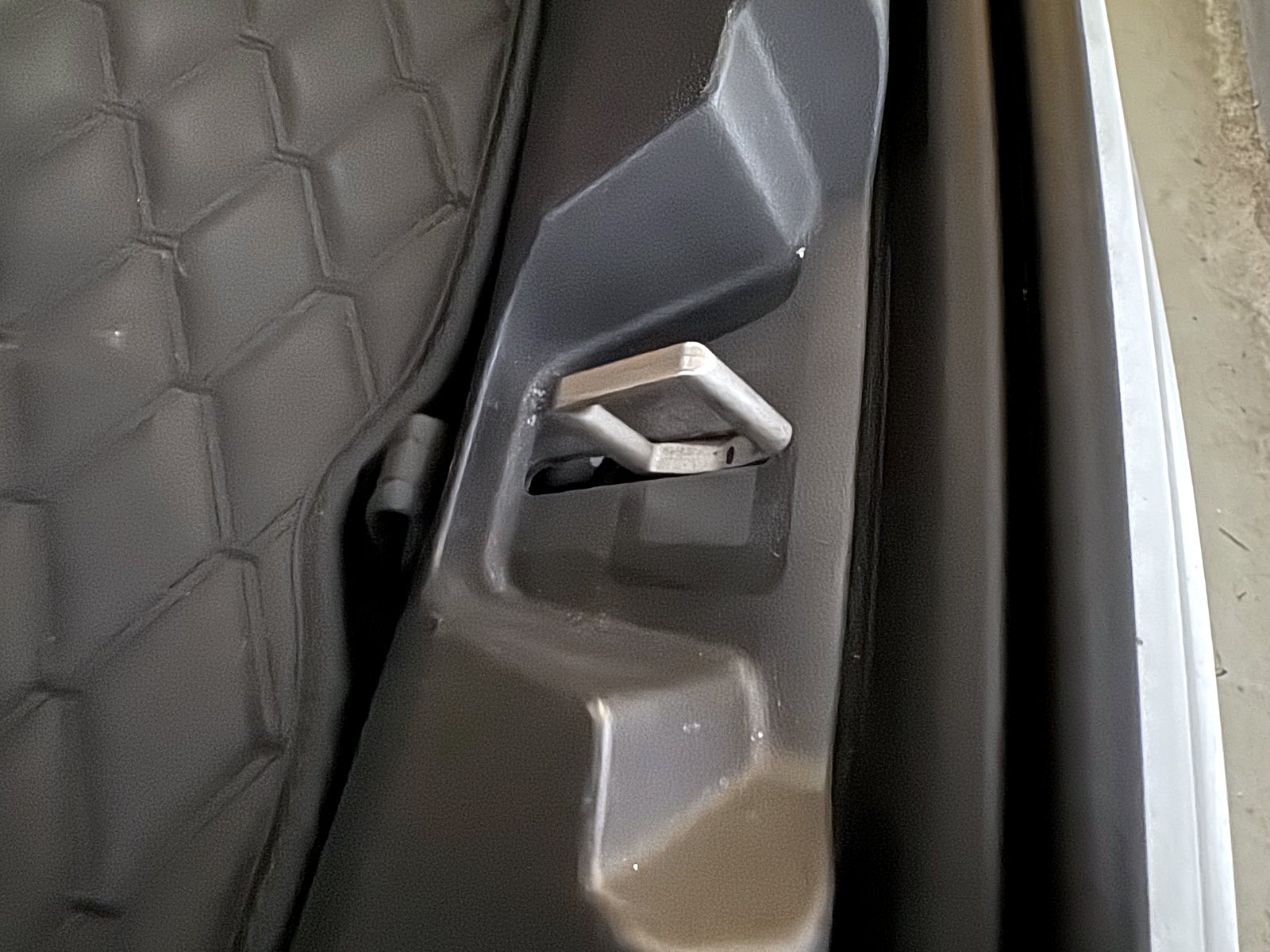
The photo shows where the rear latch meets the striker on my car. Check that cargo and liners stay clear of this contact.
How Tesla says to close the front trunk
The hood should not be treated like a heavy conventional hood that latches when dropped. Tesla specifies a two-hand closing method:
- Clear the opening and lower the hood until the striker meets the latches.
- Place both hands at the designated pressure points shown in Tesla’s hood-closing diagram and press firmly.
- Carefully check the front edge to confirm the hood is fully latched before driving.
Do not slam or drop it, press with one hand, or concentrate force on the front edge or center. Keep keys and jewelry from scratching the paint.
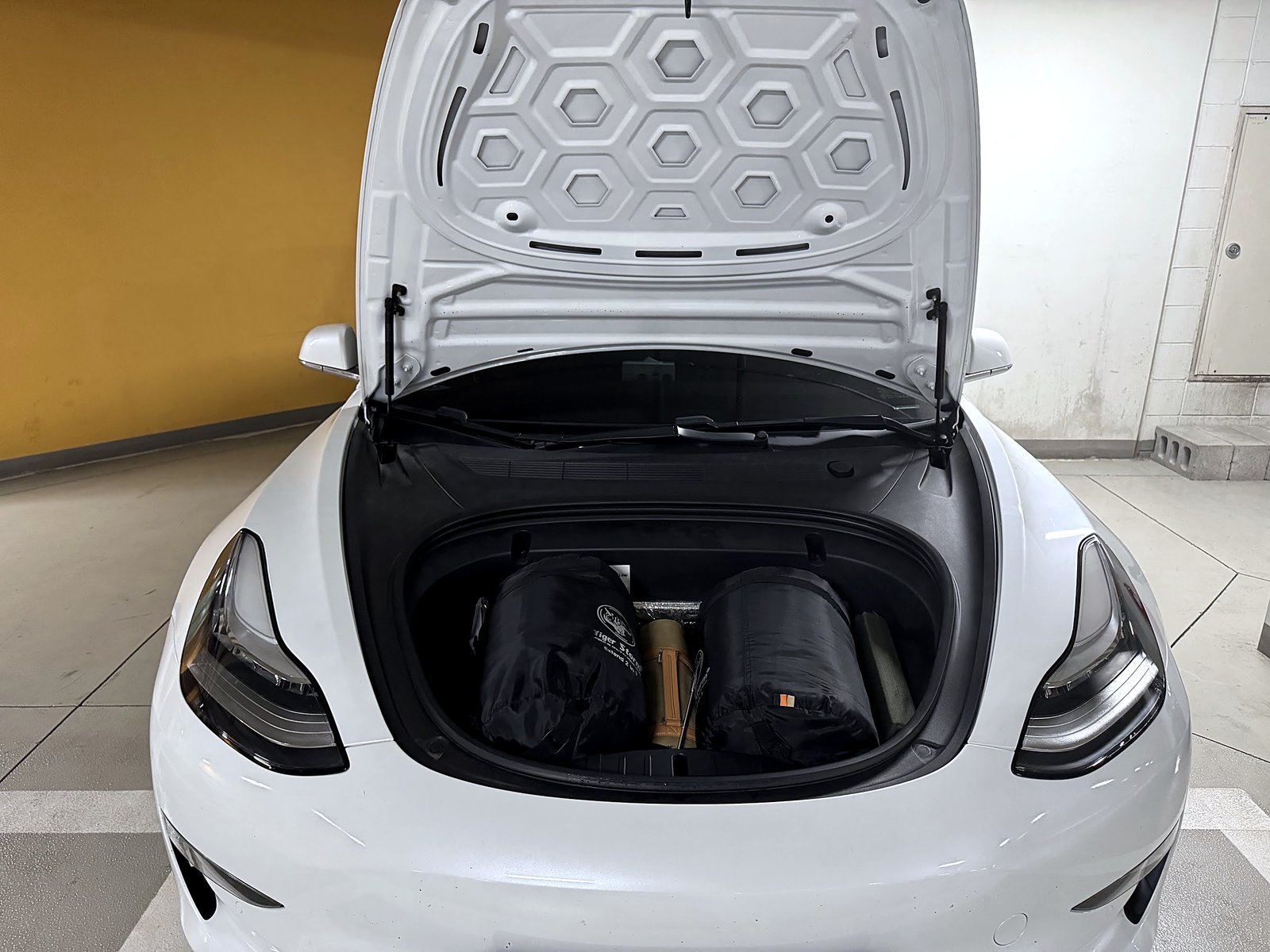
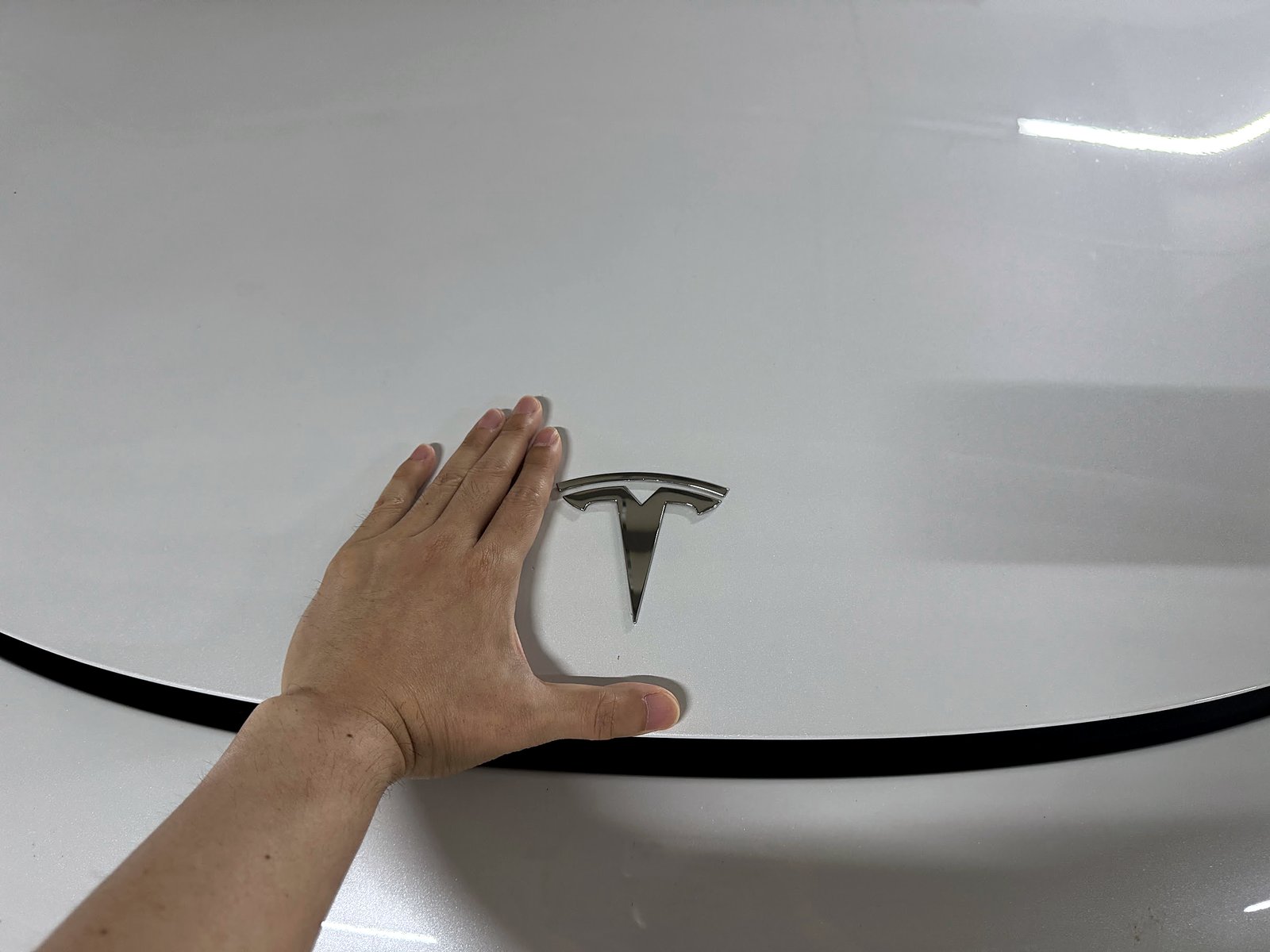
If correct technique and a clear opening do not resolve the problem, stop experimenting. A latch, striker or alignment fault needs inspection. Adding grease or moving hardware without a diagnosis can obscure the original problem.
Rear trunk: manual and powered versions
The hinge and strut photos here show my 2020 car. Other Model 3 builds may have a powered trunk, and aftermarket conversions can change the original configuration. Check the actual equipment and the applicable owner’s manual rather than using model year alone.
For a powered trunk, Tesla says to keep people and objects clear and monitor its movement. If an obstruction stops closing, remove it before trying again. Do not force or slam the lid. Confirm secure latching before driving.
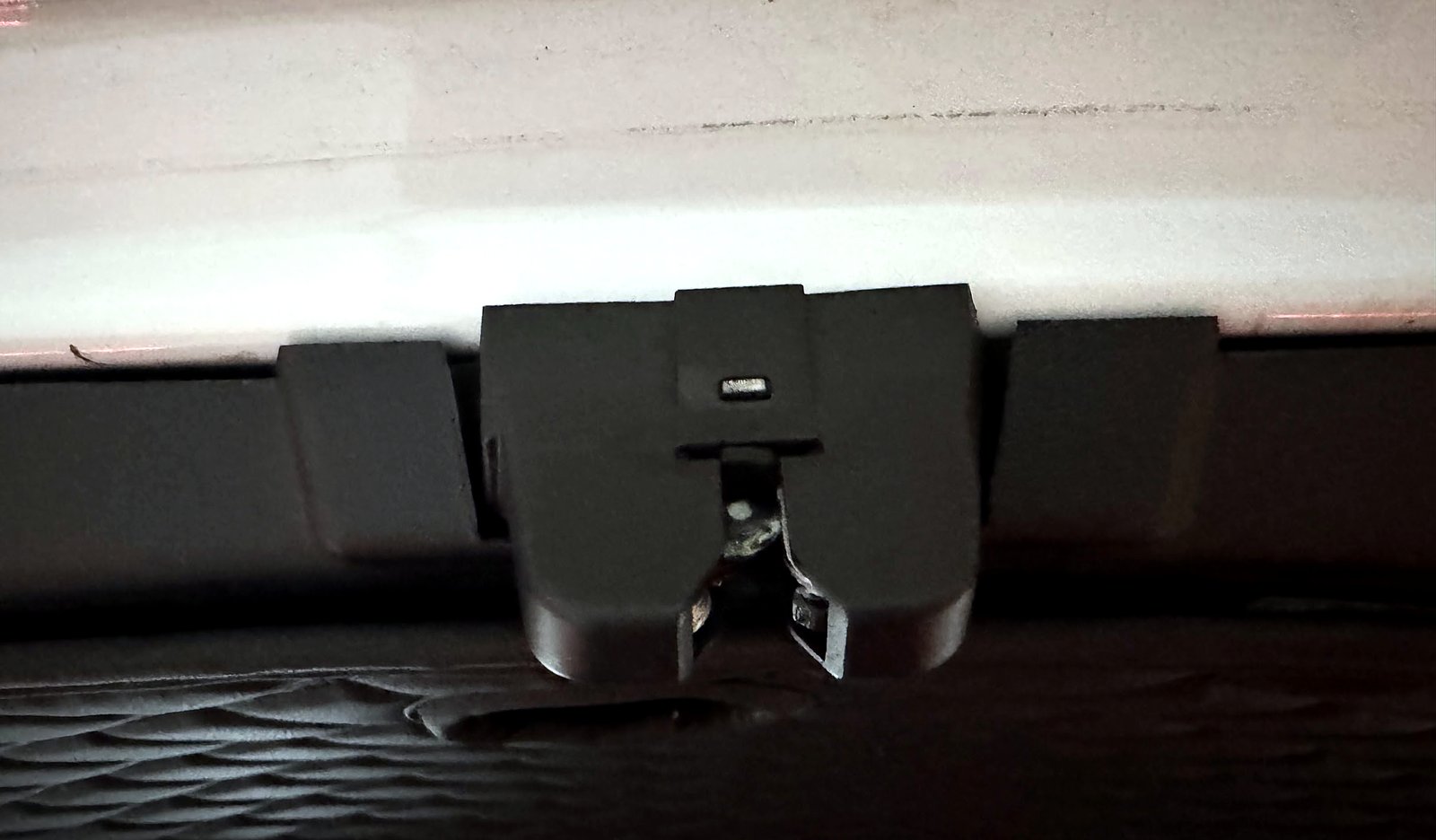
Repeated bouncing, failure to catch, a persistent open warning or visible misalignment is worth documenting for service. Tell the technician whether it happens every time, only with cargo loaded, or after a particular event.
The trunk-harness recall work on my 2020 Model 3
I had the trunk cable/harness reinforced under recall. That is how I remember the work being described. I have had no problems with that area so far.
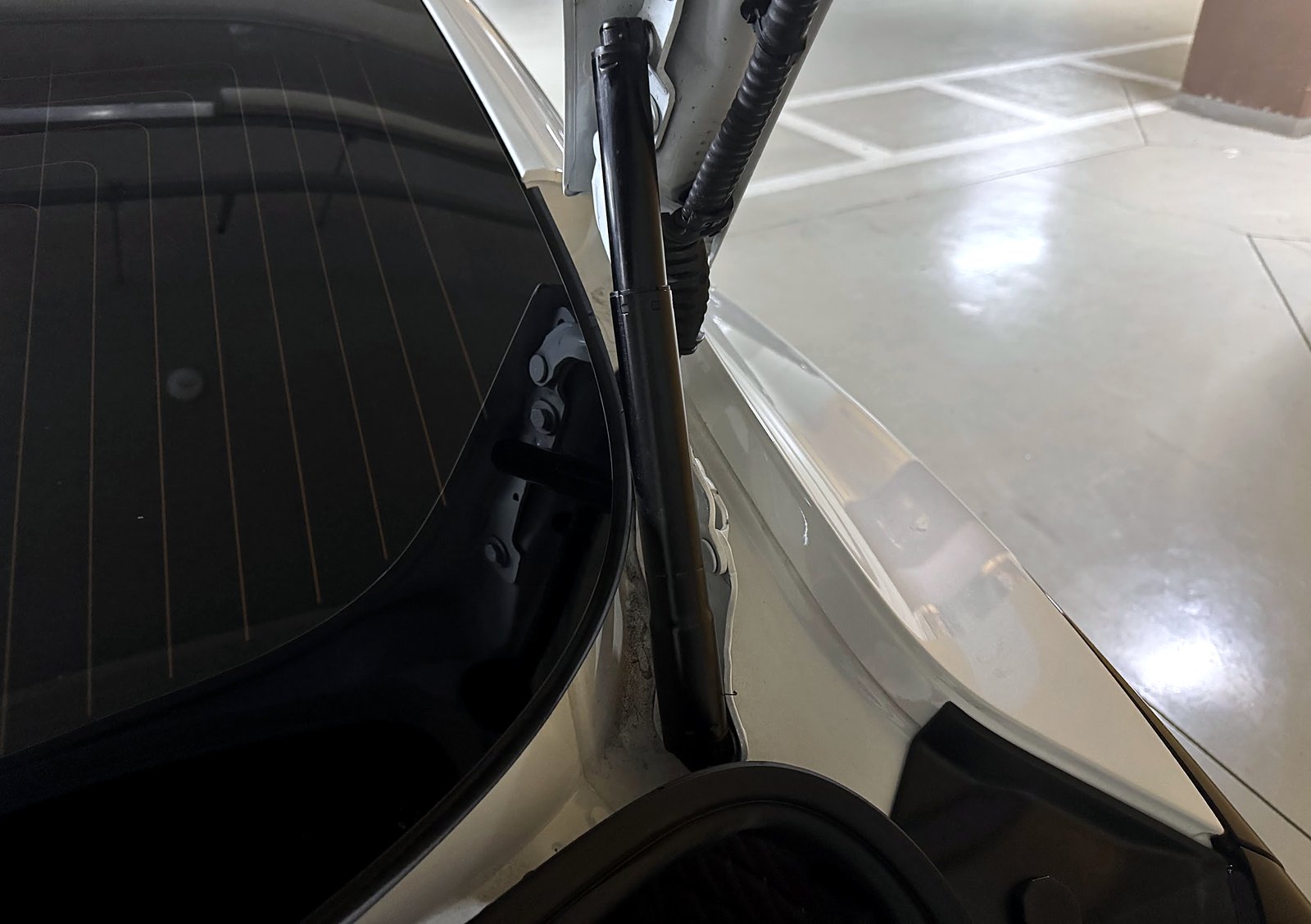
Tesla’s recall information covers affected 2017–2020 Model 3 vehicles. Repeated trunk movement can wear the coaxial cable carrying the rearview-camera feed. Depending on the inspected condition, Tesla describes fitting a guide protector or replacing the harness and fitting the protector, at no cost for the recall repair.
Check your own VIN using Tesla’s VIN recall search and confirm any outstanding work or completion record with Tesla.
My completed recall is useful maintenance history. Keep latch troubleshooting separate from this wiring recall.
If the rearview image flickers or disappears, report that symptom and check recall status. My camera-warning guide separates camera visibility checks from other causes. Do not assume that cleaning a lens resolves a wiring fault.
Water leaks, rubber seals and weak lid supports
Use these checks to narrow down leaks or support problems before ordering parts.
If you find water
Photograph where the water first appears and note whether it follows rain, washing or opening the lid. Check the visible seal for a tear or displacement and remove loose debris from the opening. Avoid applying sealant before the entry path is established.
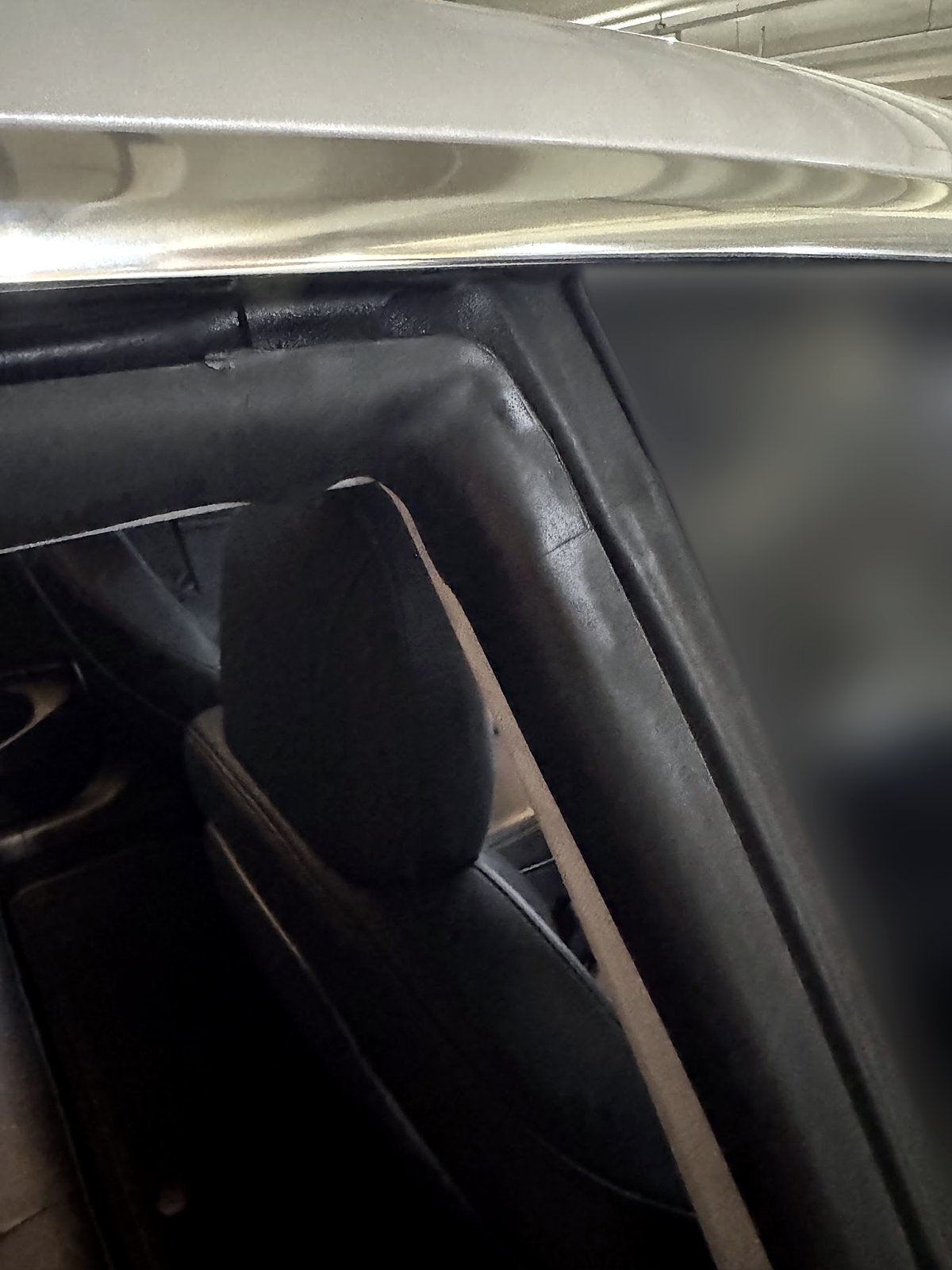
A door seal and a trunk seal are different parts. The door-opening rubber in the photo below should not be treated as a diagnosis of a trunk leak. My door-molding experience is covered in the phone-key and window article.
If the lid will not stay up or a support makes noise
Keep yourself and others out from under an unsupported lid. Arrange inspection of the support and mounting points rather than assuming that a particular click identifies the failed part. I have not replaced failed struts as part of the experience described here.
For powered versions, describe where motion stops and whether any message or chime accompanies it. Do not transfer a manual-strut repair method to a powered mechanism without the correct procedure.
Keep the interior emergency release accessible
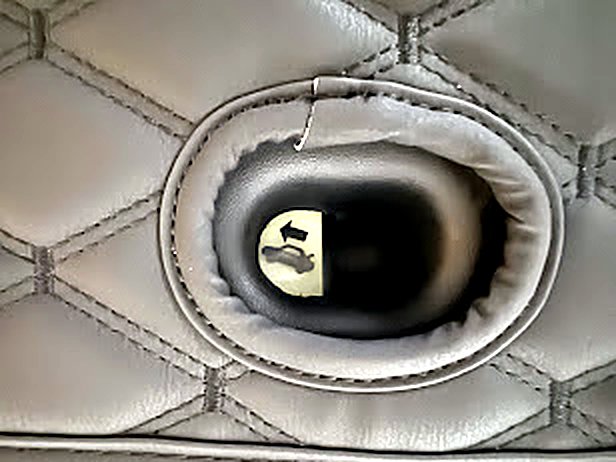
The Model 3 manual describes an illuminated mechanical release inside the rear trunk that can release the latch without vehicle power. Follow its arrow while pressing and holding, then push the lid open. Keep liners and cargo clear of it. Do not climb into or close someone inside the trunk to test it.
Fix order for a lid that will not stay closed
Start with a clear opening and the correct closing technique. Check that a liner, cable or bag is not entering the latch path, then confirm the lid really locks. A powered trunk that reverses should be checked for an obstruction before another attempt. Do not compensate for repeated latching trouble by slamming harder or moving the striker.
If the lid stays misaligned, will not latch or reports open repeatedly, ask for latch and alignment diagnosis. For weak supports, match the actual manual or powered mechanism before considering replacement parts; keep clear of an unsupported lid. For a leak, locate the first wet area before buying a seal. The older-car trunk harness recall belongs to the rear-camera wiring branch and should be checked by VIN independently of a closing fault.
FAQ
Did the recall fix your trunk latch?
I had occasional incomplete closing and separately received the cable/harness recall remedy. The recall addresses a wiring issue.
Was your complete trunk harness replaced?
I remember reinforcement under recall. I would use the service invoice to identify the exact operation rather than infer a full replacement.
Have you had problems after the recall work?
No problems with that area so far.
Will every seal or latch repair be free?
No. The recall remedy and an ordinary repair are different. Confirm recall eligibility, warranty coverage and any estimate for the specific problem before authorizing work.
Official references
See Tesla’s trunk-harness recall explanation, front-trunk instructions and rear-trunk instructions. My own evidence is the 2020 car, photographs and recall experience described above.
— Volt Fix Garage
Leave a Reply