
Short answer: My June 2020 Model 3’s exterior handle has frozen and would not come out in winter. Bumping it with the bottom of my fist and lubricating it have both worked well for me. I have not needed a handle repair or replacement for that problem.
Start gently: do not pry with tools or use excessive force. Tesla’s silver-handle method limits bumps to about the force of knocking on a door. Black handles use a different ice-release procedure.
First checks · Silver and black handles · Lubrication · When to seek service
My experience: June 2020 Model 3, HW3, 76,000+ miles, silver/chrome handles. Winter freezing, successful fist bumps and lubrication, and no required repair or replacement are my owner account.
Official guidance: the color-specific ice procedure, WD-40 pivot-pin method and app options below come from Tesla.
Frozen handle: match the action to the symptom
| Handle / symptom | Recommended first action | When to stop |
|---|---|---|
| Silver/chrome handle frozen | Tesla bottom-of-fist method at knocking-level force | No excessive blows, tools or panel damage |
| Black handle frozen | Press frontmost section inward, then rear to open | Follow color-specific instructions |
| Ice prevention at pivot | Targeted WD-40 treatment; cycle per guide | No flooding cavity or spraying unrelated parts |
| Latch opens; glass stuck | Defrost glass and seals | Do not pull against trapped glass |
| Handle moves; unlocked door does not open | Check key recognition; use permitted app access | Persistent latch/electrical fault: service |
Check what is actually frozen
A handle that will not pivot out is different from a handle that moves normally while the door remains locked. In my case, the winter symptom was the handle being frozen and not coming out.
- Handle will not move in icy conditions: use the appropriate ice-release guidance below.
- Handle moves but the door will not unlatch: confirm the car is unlocked and recognizes your key. Do not assume extra force is the answer.
- The door releases but the glass is stuck: allow the glass and seals to defrost; avoid pulling the door against trapped glass.
- The handle remains stuck after thawing: document the symptom and arrange inspection.
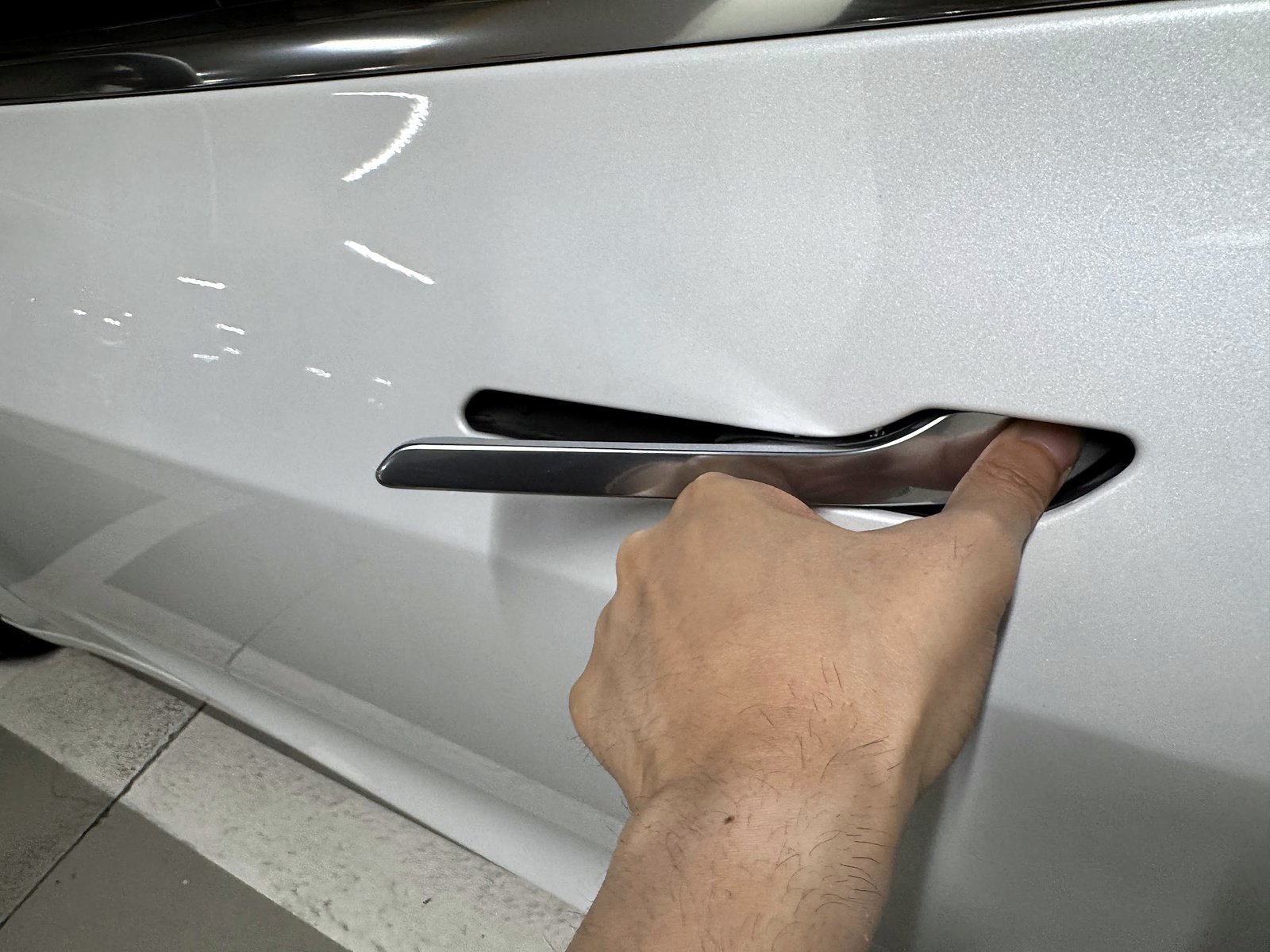
The photos show the silver-handle layout on my car.
Tesla’s ice-release methods: silver versus black handles
Silver/chrome handles: remove jewelry, try pressing the wide rear part, then use the bottom of your fist around the handle perimeter and the rear end of the wide section to release ice. Use knocking-level force; never dent the panel or pry with a tool.
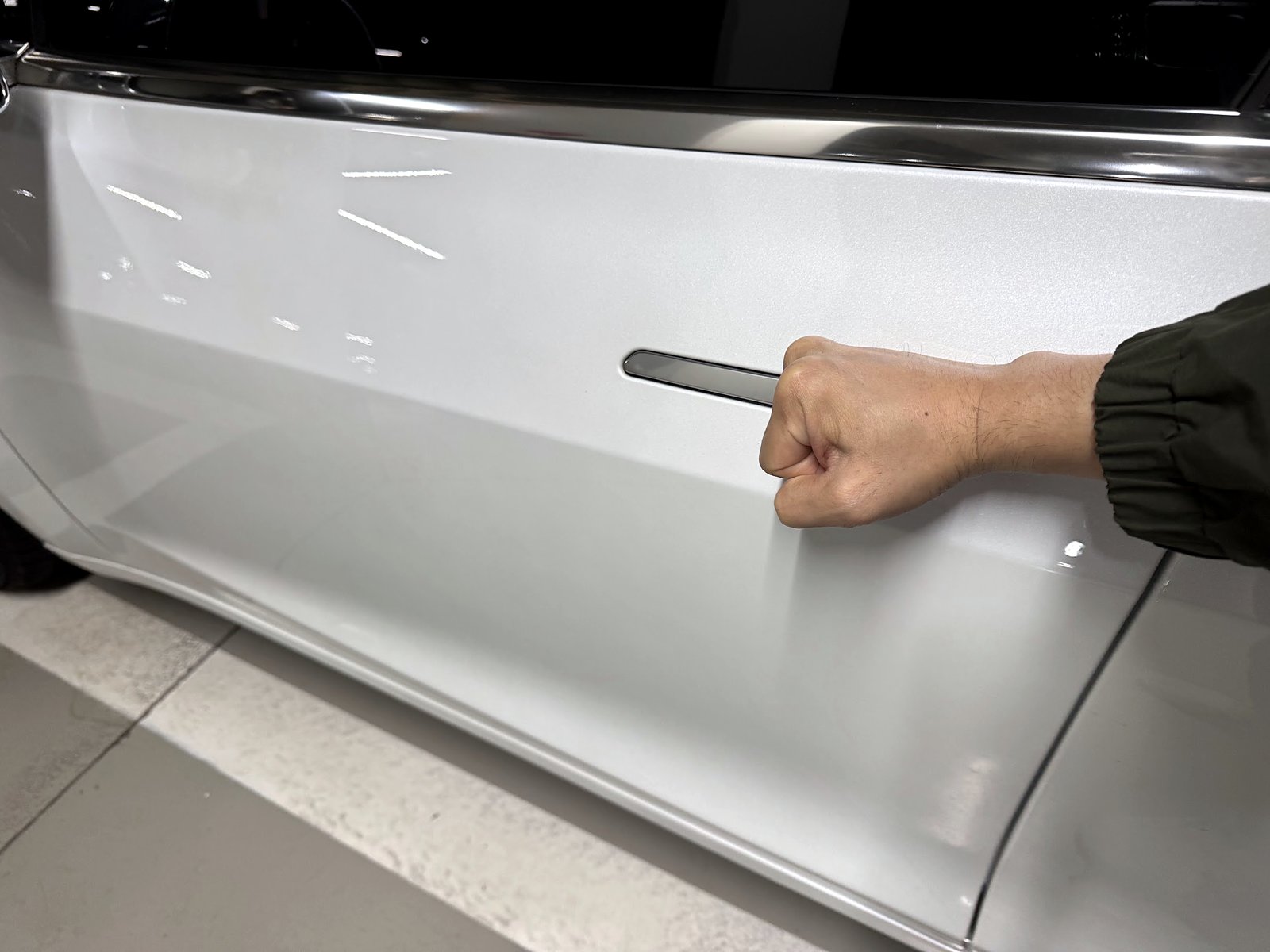
Black handles: Tesla instead directs pressing the frontmost section inward, then the rear section to open normally. After either method, cycle the freed handle to release remaining ice, confirm it retracts and check that the door closes fully before driving.
Read the official ice-removal instructions and illustrations for the correct handle.
Do not escalate to harder blows if movement does not return. Stop before damaging the paint or handle.
Lubrication helped me too
I have also had good results from lubrication.
Tesla publishes a specific preventive WD-40 procedure for the pivot pins when freezing rain, snow or ice is expected. Follow the product warnings and the complete Tesla pivot-pin guide.
- Open the handle and support it with a folded towel or other soft material.
- Attach the spray straw and wear eye protection.
- Aim beside the pivot pin, using the spring as the guide shown by Tesla, and spray for about one second without spraying other components.
- Remove the support and cycle the handle about ten times.
- Repeat the short spray and cycling sequence, then follow the guide for the remaining handles.
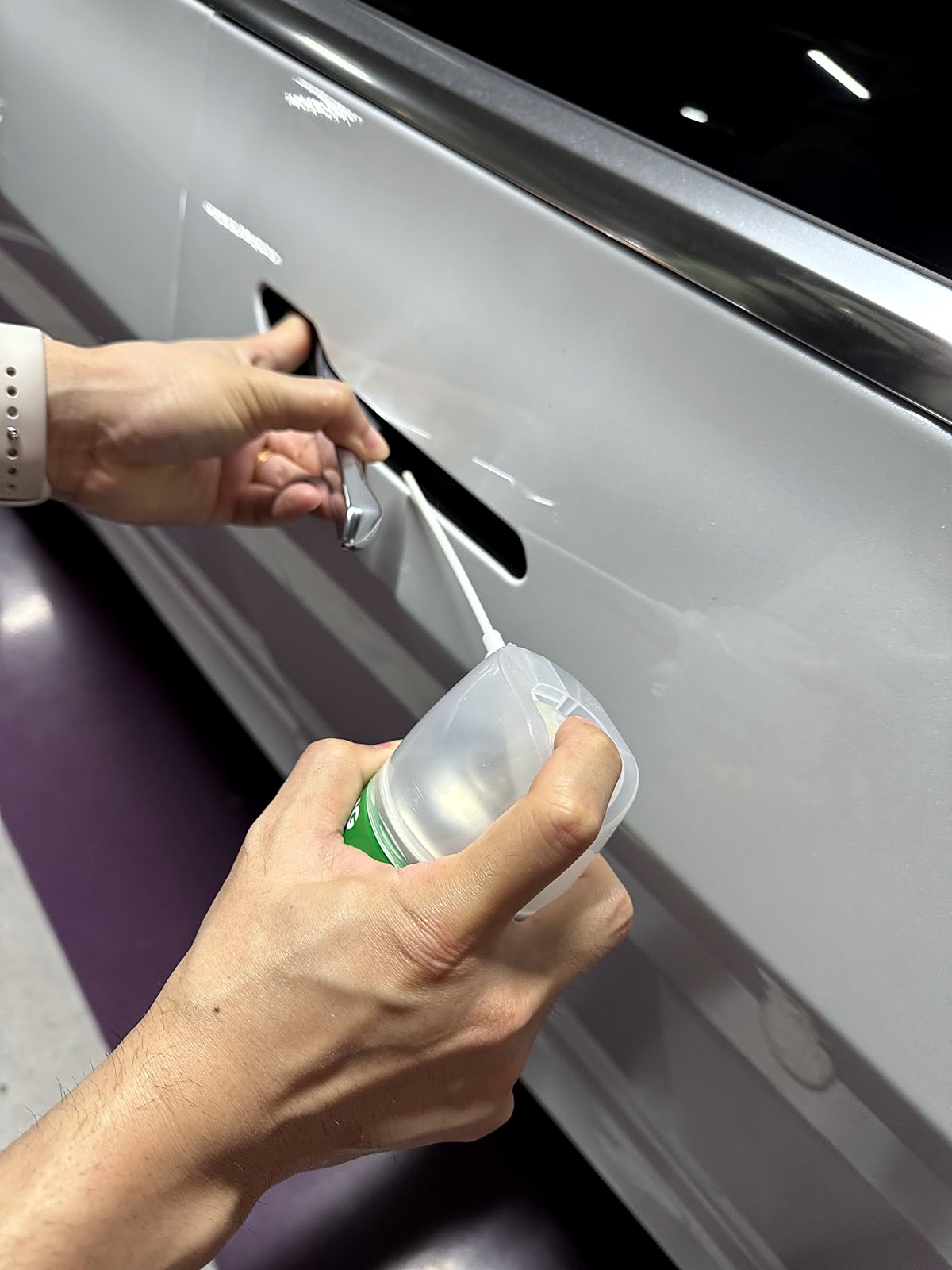
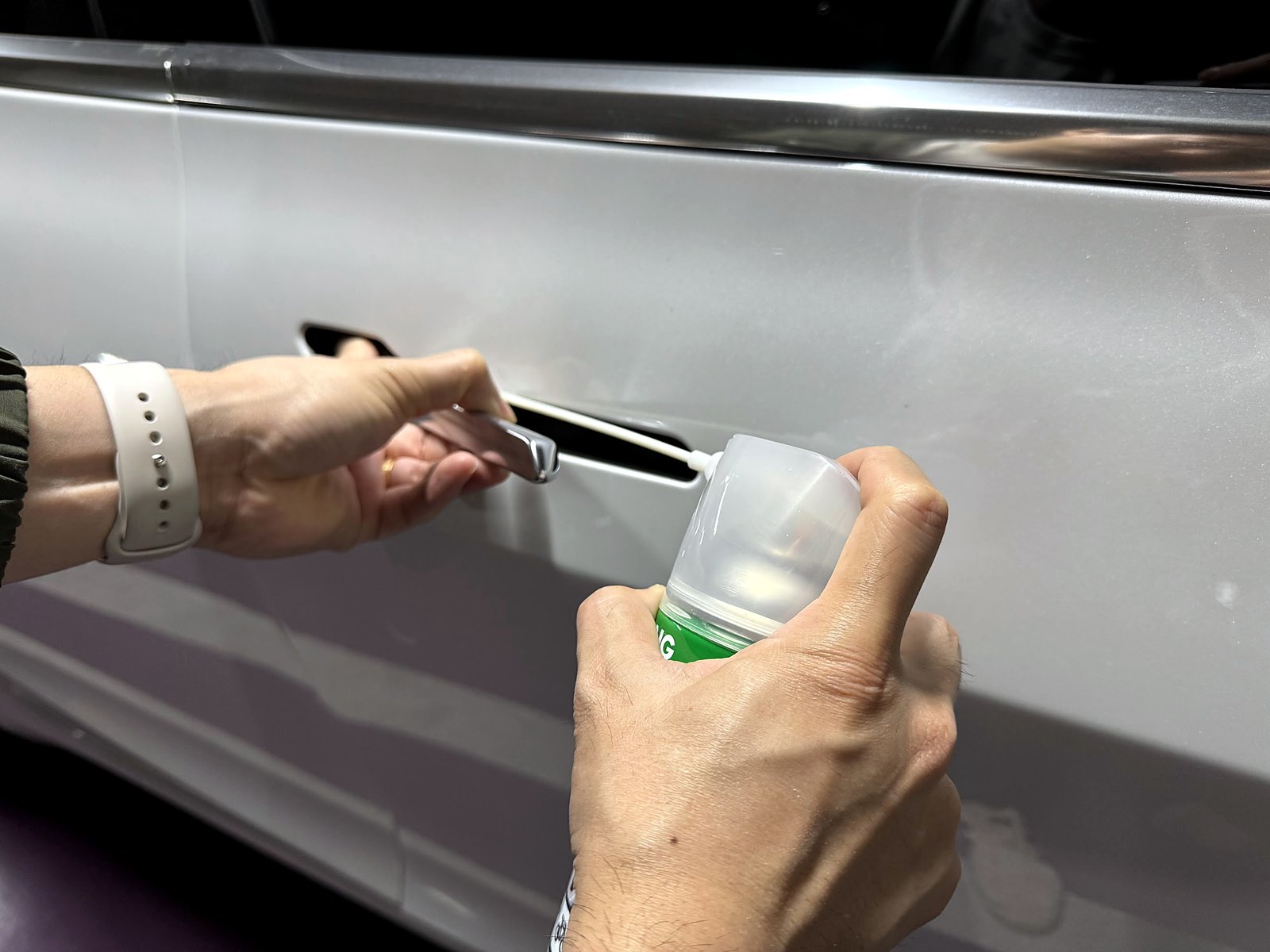
This is a targeted pin treatment, rather than a reason to flood the handle cavity. If you cannot identify the pin or safely aim the spray, ask service to perform the maintenance.
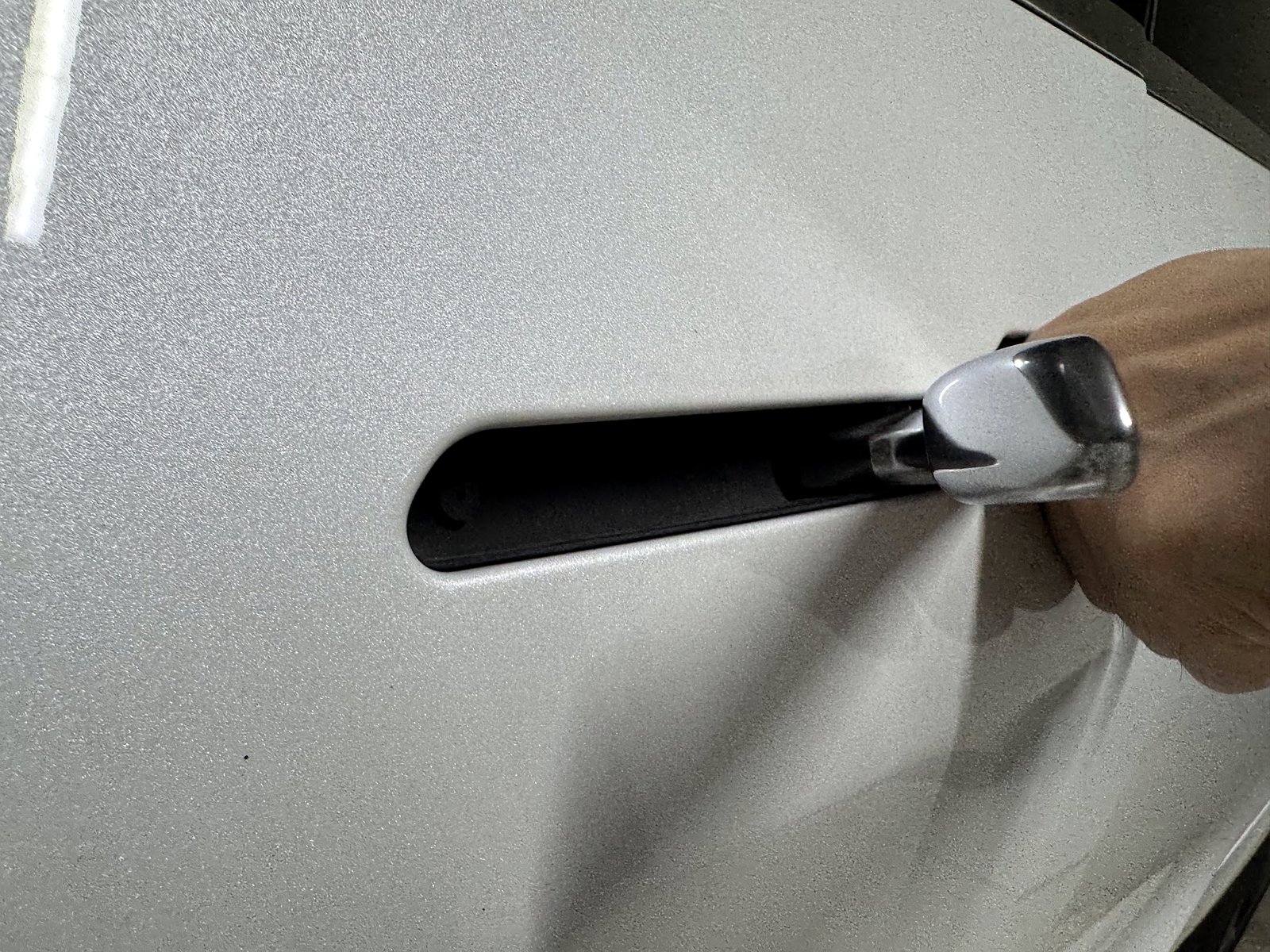
App access and defrosting are separate options
Tesla’s cold-weather guidance describes adding Unlatch Door to the mobile app’s quick controls by holding a quick-control button and customizing it. When next to the vehicle, that control can pop the driver door without operating the frozen exterior handle.
The app also offers Climate > Defrost Car to help clear ice from the glass and other listed areas. It is worth allowing the window to free up before opening a door that still feels held by ice. Do not pull against frozen glass simply because the latch has released.
If the phone is not recognized as a key, see my phone-key and window checks. Treat recognition and frozen hardware as separate symptoms.
When thawing and lubrication are not enough
My frozen handle did not need replacement.
- The handle is damaged, loose or will not return after the ice has gone.
- It moves normally but a confirmed unlocked door repeatedly fails to release.
- The window catches trim or the door cannot close and latch securely.
- The same fault happens in mild weather or keeps worsening.
Photograph or describe the symptom, temperature and whether the handle, latch or glass is failing to move. Avoid removing door trim or replacing sensors based solely on the exterior symptom.
The interior emergency release is a different subject
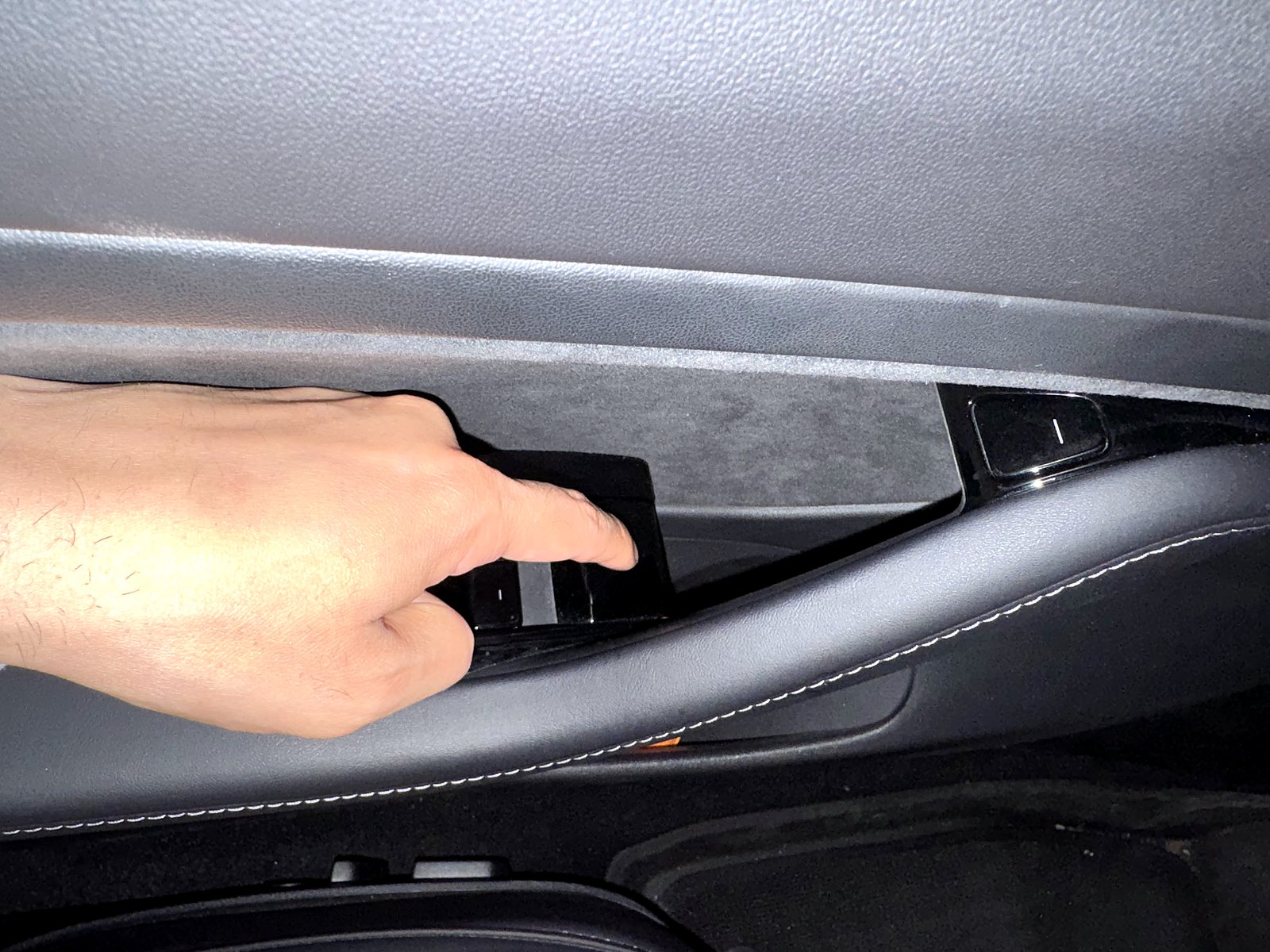
The lever shown is inside my front door. It is not a way to release ice around the outside handle. Familiarize yourself with the emergency-exit instructions for your own vehicle while it is working normally; locations and provisions vary by model and build.
Use the normal interior opening control in ordinary use. If there is an emergency or loss of power, follow the vehicle’s emergency instructions. Do not assume a photo of my 2020 front door describes rear-door releases or later vehicles.
What to buy for frozen-handle prevention
For the pivot maintenance described by Tesla, the useful kit is the specified WD-40 product with its directional straw, eye protection and a soft towel to support the handle. Directing a short spray at the specified pin is more useful than buying several different lubricants and flooding the cavity.
Match the product in the official procedure rather than assuming every product sold under the same brand name is interchangeable. Thick grease, a paint-damaging scraper or metal pry tool is not the next step for a frozen handle. Use the color-specific ice method, defrost trapped glass and stop if damage or persistent latch trouble remains. On my silver handles, gentle fist bumps and lubrication worked without a replacement.
FAQ
What actually worked on your frozen handle?
Bumping the handle with the bottom of my fist and lubrication both helped. I did not need a handle repair or replacement.
Should I use the fist method on a black handle?
Use Tesla’s instructions for that handle. Its black-handle ice method starts by pressing the front section inward; my experience was with silver handles.
Does lubrication guarantee it will never freeze again?
Reapply the specified treatment as needed, following Tesla’s guidance.
What if the handle opens but the door stays shut?
Check unlocking and key recognition first, then report persistent latch or glass symptoms to service.
Official references
See Tesla’s ice-removal guide and pivot-pin treatment, plus the cold-weather section of the 2017–2023 Model 3 manual. My successful methods and no-repair outcome are described separately above.
— Volt Fix Garage
Leave a Reply