Short answer: A sudden sharp scrape can come from debris trapped near the brake shield; noise after wet parking can involve the disc surface. Match the pattern, check warning signs and use the appropriate cool-brake inspection below. Persistent grinding or changed braking requires service.
When to stop · My experience · Brake-shield debris · What to tell service
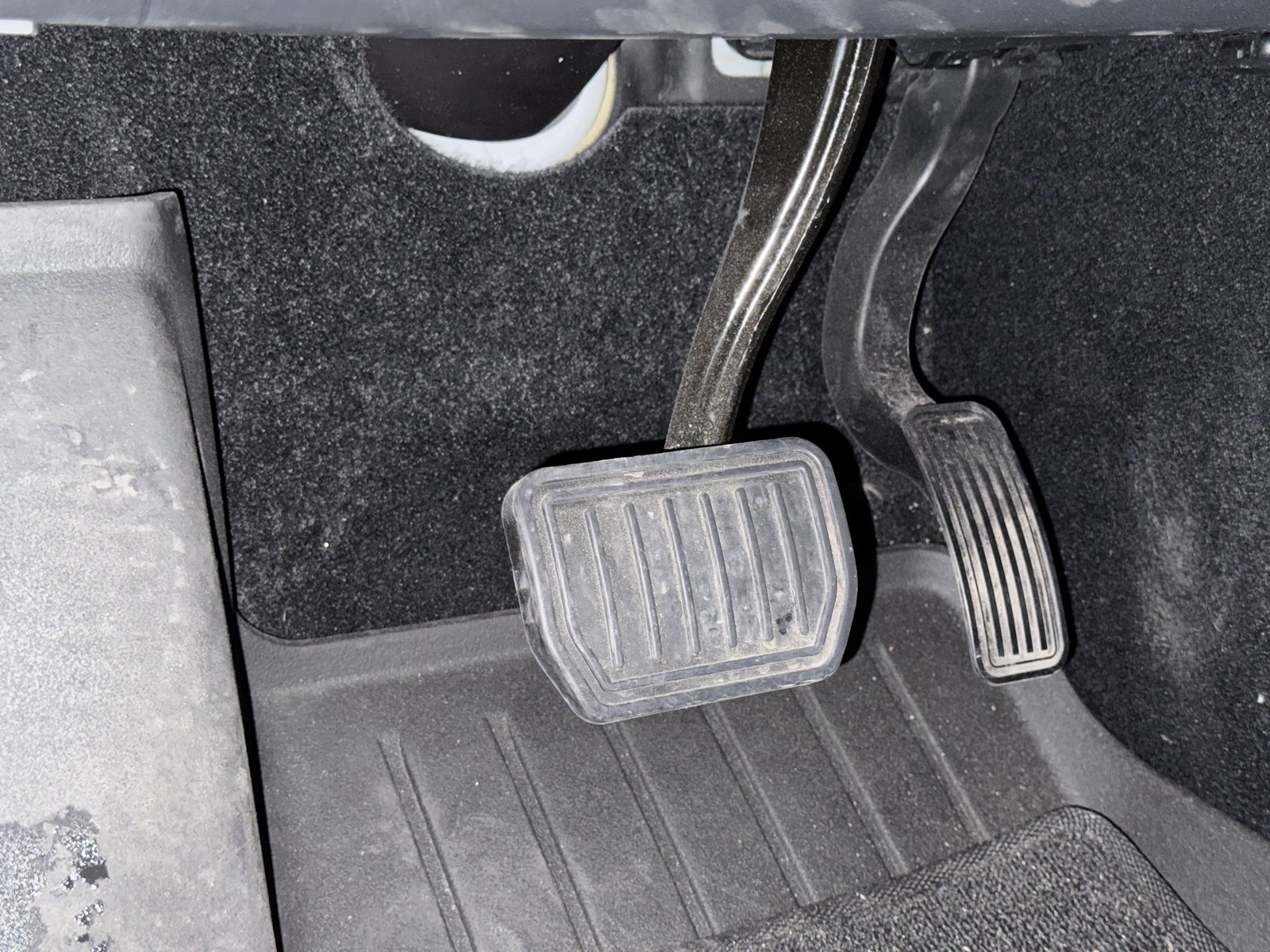
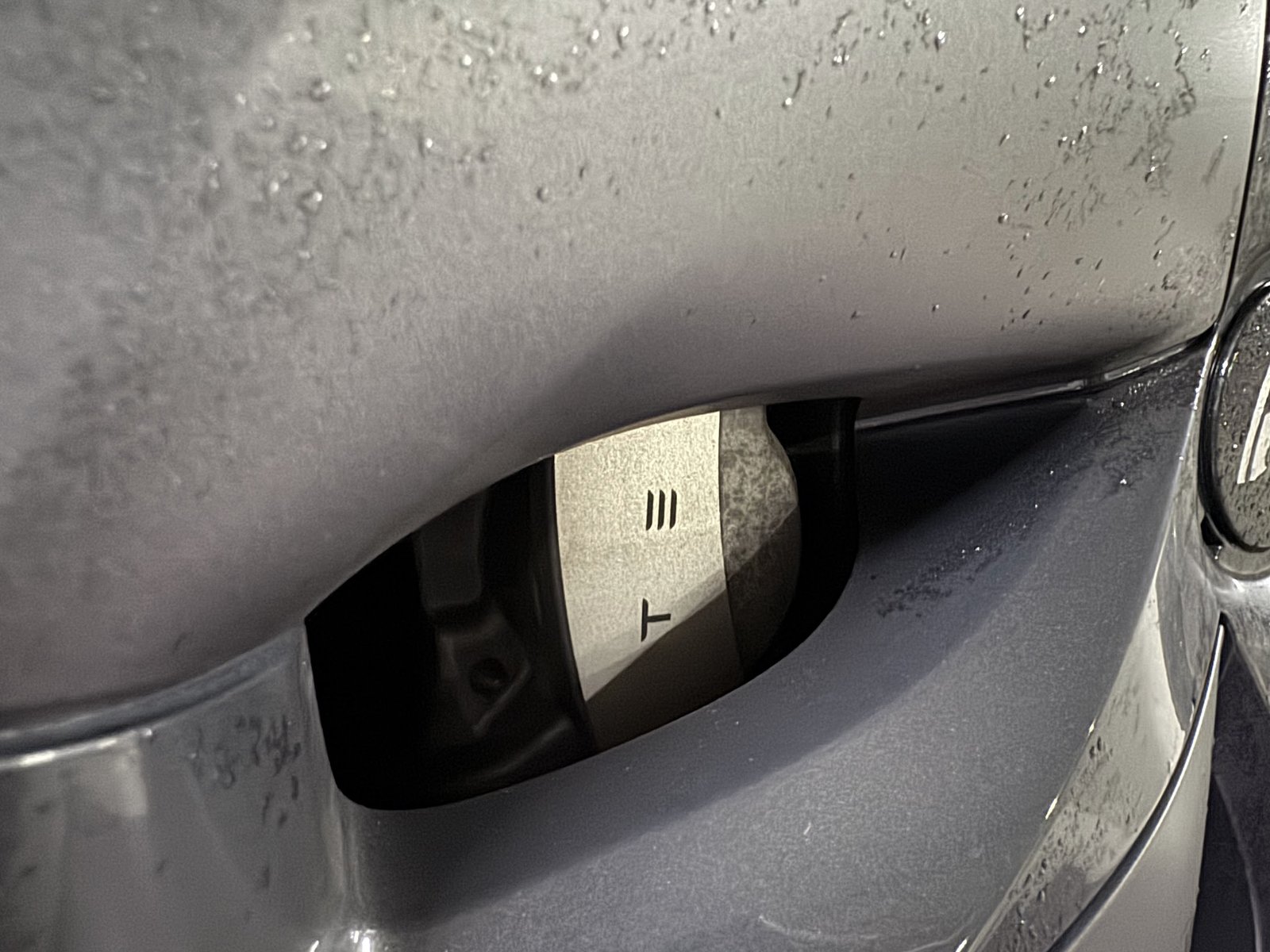
My car and experience: June 2020 Model 3, HW3, 76,000+ miles. The sharp sound, my own brake applications and the sound stopping are my experience. The photos are from my car.
Manual-based information: the brake-shield debris guidance and discussion of friction-brake use below come from Tesla.
Stop safely and arrange assistance if braking feels abnormal
- Stopping ability has changed, the pedal feels unusually soft or low, or the car pulls when braking.
- A brake warning appears, there is smoke or a burning smell, or severe vibration accompanies the noise.
- Grinding is persistent, the symptom is worsening, or there is visible wheel or brake damage.
Do not try to clear an unexplained brake fault with repeated hard stops. Get the vehicle assessed and use roadside assistance if continued driving may be unsafe.
Wheel scraping: likely branches and next steps
| Pattern | Possible cause / first check | Service threshold |
|---|---|---|
| Sudden scrape after gravel; normal braking | Debris between rotor and shield; cool-brake shield procedure | Persistent sound or uncertain source |
| Initial noise after wet parking | Disc-surface corrosion is possible | Recurring grinding or abnormal braking |
| Noise during every brake application | Pad, rotor or other brake issue | Brake inspection; do not keep hard-stopping to test |
| Noise over bumps / steering | Suspension or another component may be involved | Describe conditions for a separate inspection |
| Warning, pulling, vibration or pedal change | Stop safely and arrange assistance | Prompt inspection before continued driving |
The sharp brake noise I experienced
The most memorable part was how piercing the sound was. I dealt with it myself: after several firm brake applications, it went away. The cause was not confirmed and I did not recover a stone.
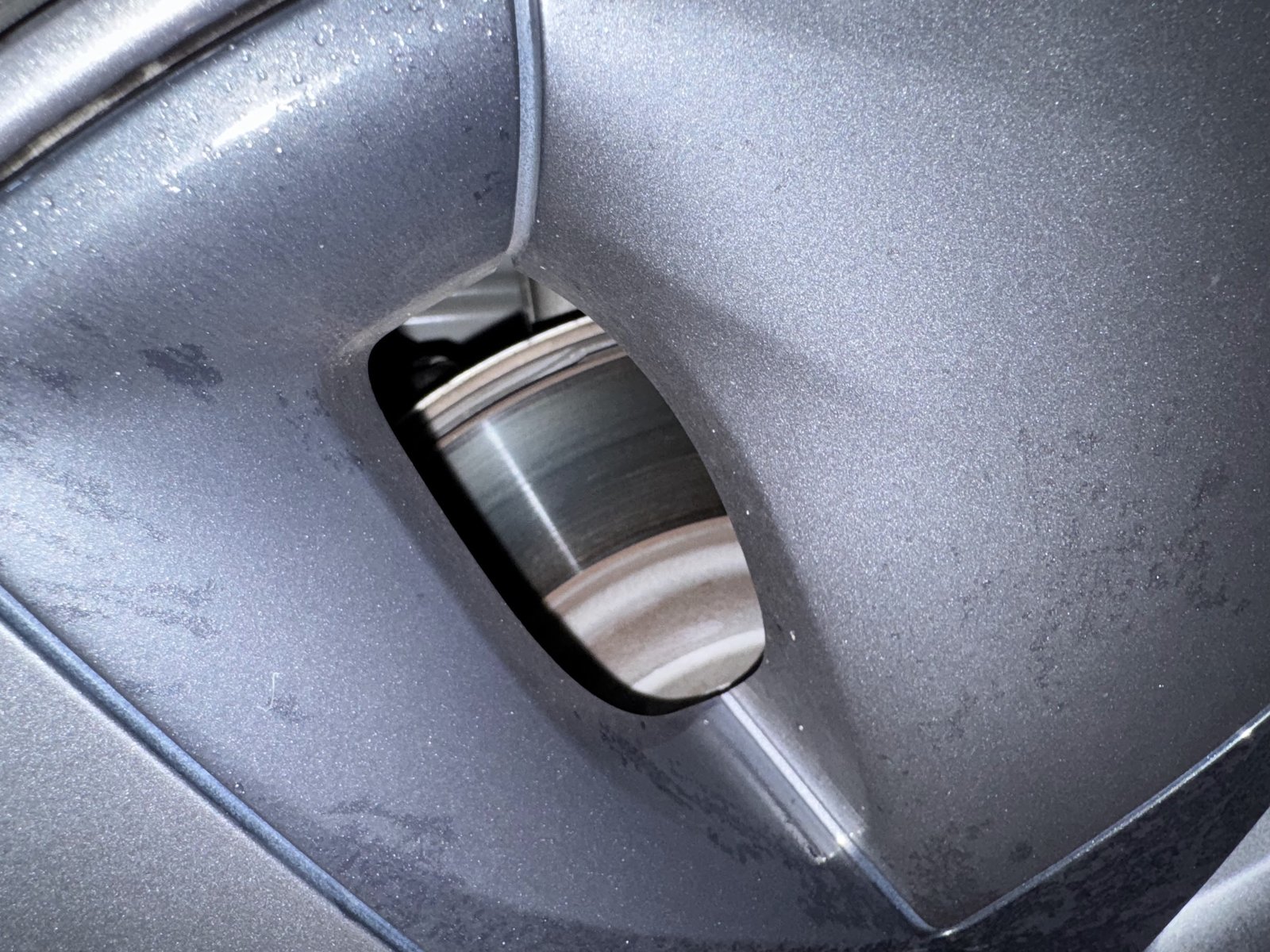
I sometimes still apply the brakes firmly in a quiet location when no other vehicles are around. That is a personal habit, rather than a recommendation to perform abrupt braking on a public road.
Describe the symptom before choosing a fix
The word “scraping” can cover several different experiences. Note what the sound follows rather than guessing the part from its pitch:
- Noise while rolling without pressing the pedal: record whether it follows wheel speed, appears in one direction, or began after an impact or gravel.
- Noise during braking: note whether it happens at every stop or only initially after the car has been parked.
- Noise mainly over bumps or when steering: describe that separately; my suspension-noise experience explains why reproducing the conditions helped during service visits.
- Noise with a change in braking behavior: prioritize inspection over a home remedy.
These observations help a technician narrow the investigation.
What Tesla says about brake-shield debris
Tesla describes a rock trapped between the rotor and brake shield as a possible explanation for a sudden scrape or grind, including at low speeds. Its reassurance about braking performance applies to that specific situation—not to every unexplained grinding noise.
The official procedure starts in Park, with brakes cool enough to touch. Remove the Aero cover if fitted, then use a gloved hand to press gently around the shield until debris falls out. Avoid tools that could damage it and do not permanently bend the shield. Confirm the noise is gone and refit the cover.
If that does not work, Tesla describes slow forward-and-reverse movement in a safe area, stopping between directions and monitoring surroundings. Persistent noise calls for service. Read the complete official debris-removal guide before attempting it.
If you cannot identify the shield, safely reach it or distinguish the symptom from a brake fault, leave the check to a qualified shop.
Firm braking, surface rust and brake burnishing
Tesla explains that regenerative braking reduces friction-brake use, so rust or corrosion can still develop on the discs. Its manual advises regular brake-pedal use and refers to burnishing when appropriate. It also describes pad wear indicators that squeal when replacement is needed.
Those are different possibilities to consider. A sharp noise that improves after brake use does not by itself prove surface rust, and my few firm applications were not a documented completion of Tesla’s burnishing procedure.
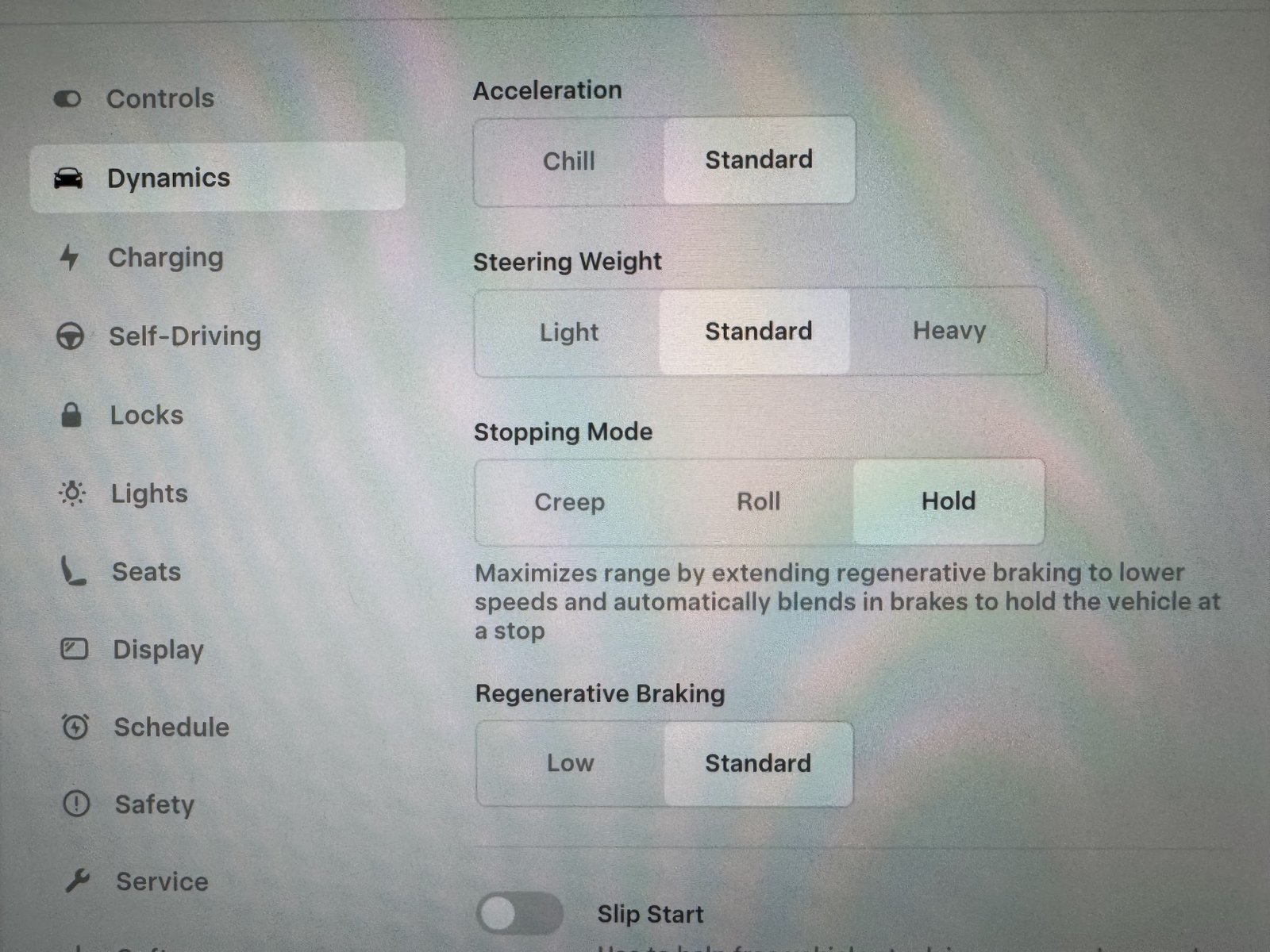
For a maintenance concern, follow the current vehicle-specific guidance linked from Tesla’s braking and stopping manual, or ask service whether burnishing is appropriate. Do not substitute an improvised series of hard stops for diagnosis of persistent grinding.
I would not change stopping or regenerative-braking settings solely to chase an unexplained noise. Keep the driving behavior predictable and establish what needs attention first.
What to record for a brake inspection
- When the noise began and whether it happens while rolling, turning or pressing the pedal.
- Which corner it seems to come from, if you can tell without unsafe testing.
- Any warning message, pedal change, pulling, vibration or smell.
- Recent wheel work, impact, wet parking conditions or gravel exposure.
- What changed the symptom and whether it returned.
A recording can help, but have a passenger make it or record while safely stationary. Do not handle a phone while driving to capture the sound. Tell the shop if the noise has stopped; the history is still useful.
Brake components can remain hot after driving. A view through a wheel opening is not a complete brake inspection. Leave wheel removal, lifting, pad measurements and component repair to someone equipped for that work.
How to choose between debris removal and a brake inspection
A sudden scrape while rolling, especially after gravel, makes the rotor/shield gap a useful first inspection area if braking remains normal and no warning is present. Let the brakes cool, identify the shield and use the linked gentle debris procedure. If you cannot safely reach or identify it, a shop can perform that check.
A sound that occurs on every brake application, persistent grinding, a new pull, vibration or pedal change should move the decision toward inspection. Ask for pad measurements and rotor condition rather than ordering a shield, pad set or wheel bearing by sound alone. Disc corrosion and trapped debris call for different treatment. Tesla’s prescribed brake maintenance can be useful after diagnosis; repeated hard stops are not a universal clearing procedure. In my case the sound stopped after firm brake use, with no recovered stone.
FAQ
Did you definitely have a stone in the brake shield?
I did not recover a stone. The sharp sound stopped after several firm brake applications; the debris-removal procedure below is the separate Tesla-recommended method.
Should I copy your firm-braking method?
I am reporting what happened, not prescribing it for another car. Check the warning signs first and use Tesla’s applicable maintenance guidance or a professional diagnosis.
Is a scrape safe to ignore if the car still stops?
No. Normal-feeling braking does not identify the source. Persistent or recurring noise deserves inspection, and any change in braking behavior needs prompt attention.
Does regenerative braking mean the brake pads never wear out?
No. Tesla specifies brake inspection and replacement when needed. Do not infer pad condition or remaining life from how rarely you press the pedal.
Official references
See Tesla’s brake-shield debris procedure and braking, corrosion and wear guidance. My own account is the sharp noise and its disappearance after brake use, with the cause unconfirmed.
— Volt Fix Garage
Leave a Reply