
Quick answer: VCFRONT_a447 (“Cabin climate control system requires service”) means the car’s HVAC / thermal system has detected a fault that prevents normal heating or cooling.
The soft-reset trap: if a scroll-wheel reboot clears VCFRONT_a447 while climate is off, but the alert comes straight back the moment you turn A/C or heat on, stop resetting it. Turn climate Off and book service.
My failure at 5 years, 5 months: a ruptured A/C condenser. The fix was radiator removal, a new condenser and a refrigerant recharge for about US$730. Running the system on a leaking circuit can starve the compressor of refrigerant and oil, and a compressor job can roughly double the bill to US$1,450+.
My experience and scope: My June 2020 Model 3 has HW3, the Intel Atom media computer, a resistive PTC cabin heater and 76,000+ miles. The alert, the reboot behavior, the condenser diagnosis, the days of driving with climate off and the cost below all come from my car and my invoice. The general guidance on how Tesla A/C systems work and what not to put in them comes from Tesla’s service documentation. That includes the heat-pump Model 3 built from late 2020 (2021 model year) onward, where the same compressor also does cabin heating. Your diagnosis and price may differ.
Symptom table · What happened · The repair · Keep climate off · Checks and what not to buy · FAQ
VCFRONT_a447: Symptom, Immediate Action & Cost Impact
| What You Observe | Immediate Action | Service & Cost Implication |
|---|---|---|
| Alert clears after one reboot and stays gone; A/C and heat work normally | Note the date and time, keep using climate normally and watch for a repeat | Possibly a one-off. If it returns, book service and share the timestamps |
| Alert returns every time climate turns on, and the vents blow warm air when you ask for cold | Stop resetting. Turn climate Off, use the seat heaters for warmth and book service | Needs a diagnosis. On my car it was a ruptured condenser: about US$730 including radiator removal labor and recharge |
| Diagnosed, car still drivable, waiting for the part | Leave climate completely Off as instructed; dress warmly and use the seat heaters | Keeps the job at the quoted condenser price instead of adding a compressor |
| Ignoring the alert, resetting the screen and forcing A/C on | Don’t. Each run on a leaking circuit pushes the compressor with less refrigerant and oil | Risk of compressor + desiccant + line flush on top of the condenser: US$1,450+ |
| Loud metallic grinding from the front of the car | Turn climate Off right away and note whether the noise stops; contact Tesla Service promptly | If it is the compressor, expect the expensive tier above; get an itemized quote before approving work |
What Happened on My 2020 Model 3 at 5 Years and 5 Months
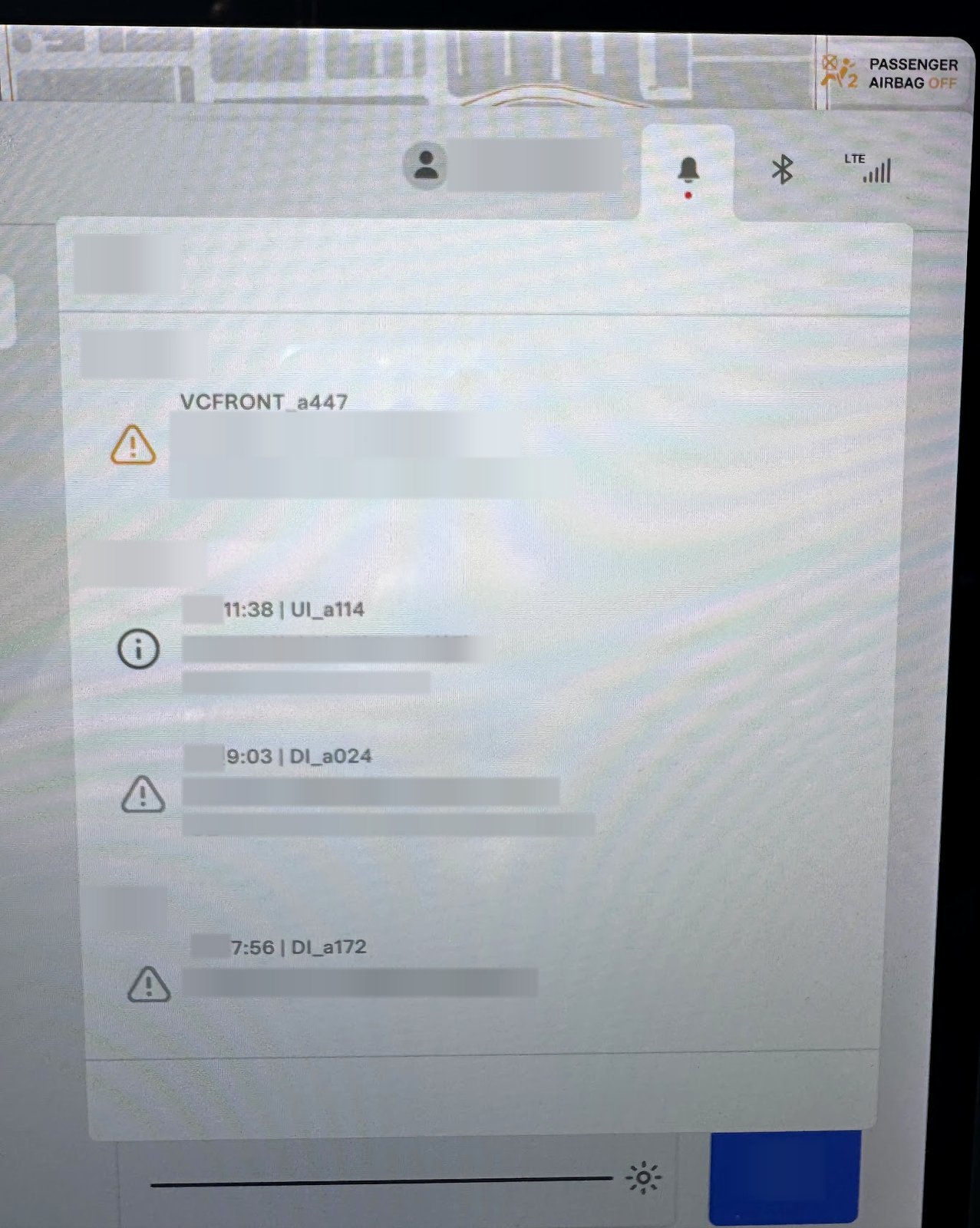
My car was five years and five months old, well past the 4-year / 50,000-mile Basic Vehicle Limited Warranty, when the A/C simply stopped blowing cold air and the alert list showed VCFRONT_a447.
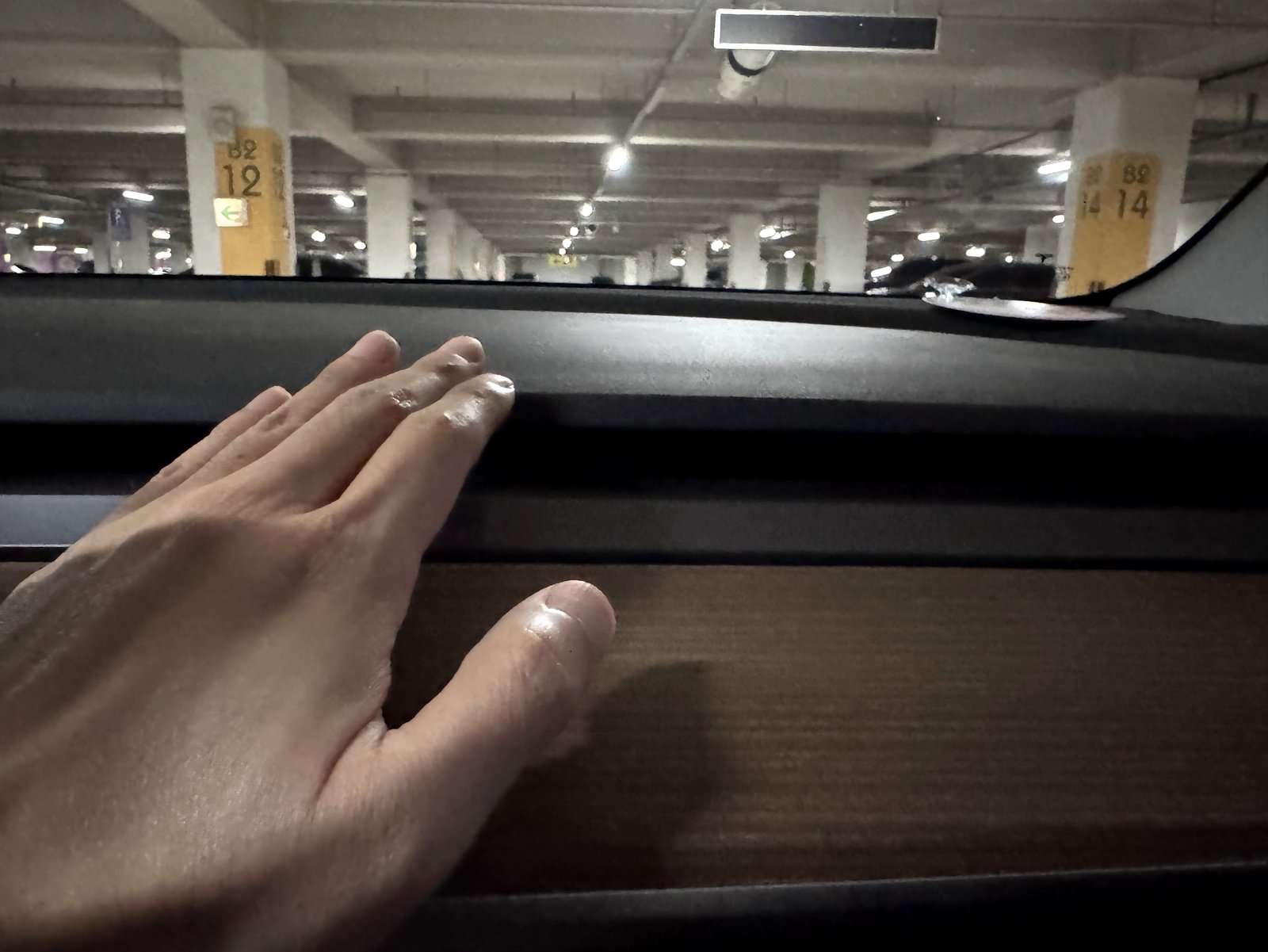
My first move was the same one I describe in my touchscreen soft reset and black-screen recovery steps: a scroll-wheel reboot. The warning disappeared, which felt like good news for about a minute. As soon as I turned climate control back on, VCFRONT_a447 came right back.
That pattern told me more than the reboot did. With climate off, nothing asked the system to run, so the car had nothing to complain about. Once I turned climate back on, the car checked the system again and flagged it. A software glitch usually stays gone after a reboot. A fault that returns on demand points to hardware. So I stopped resetting and booked a Tesla Service appointment.
Diagnosis & Repair: Ruptured A/C Condenser and Radiator Removal
Tesla Service found that the A/C condenser had ruptured and was leaking refrigerant.
The condenser is the heat exchanger at the very front of the car. The compressor squeezes refrigerant into a hot, high-pressure gas. The condenser sheds that heat to the outside air so the refrigerant can condense back into a liquid and cool the cabin again further down the line. That is why it has to sit up front, behind the lower bumper opening, where air rushes through it at speed. It is also why it is exposed to whatever the road throws up.
On the Model 3 the condenser is packaged with the radiator and cooling fans as one front module. Tesla’s published condenser procedure has the technician remove the cooling fan module, unclip the active grille shutter and take the radiator off before the condenser can come out. That access work is why my bill included radiator removal and reinstallation labor, not just the part.
The refrigerant side has its own steps. Before any A/C part is opened, the remaining refrigerant has to be recovered with a service machine. After the new condenser goes in, the system is pulled into a vacuum to remove air and moisture, leak-tested, and then recharged with the specified weight of refrigerant and the matching compressor oil. Tesla specifies the refrigerant type by sales region (R134a or R1234yf) and the oil by compressor type, and warns against mixing oil types. This is a job for proper A/C equipment, not a can and a gauge.
Why You Must Keep Climate OFF While Waiting for Parts (The $730 vs. $1,450+ Lesson)
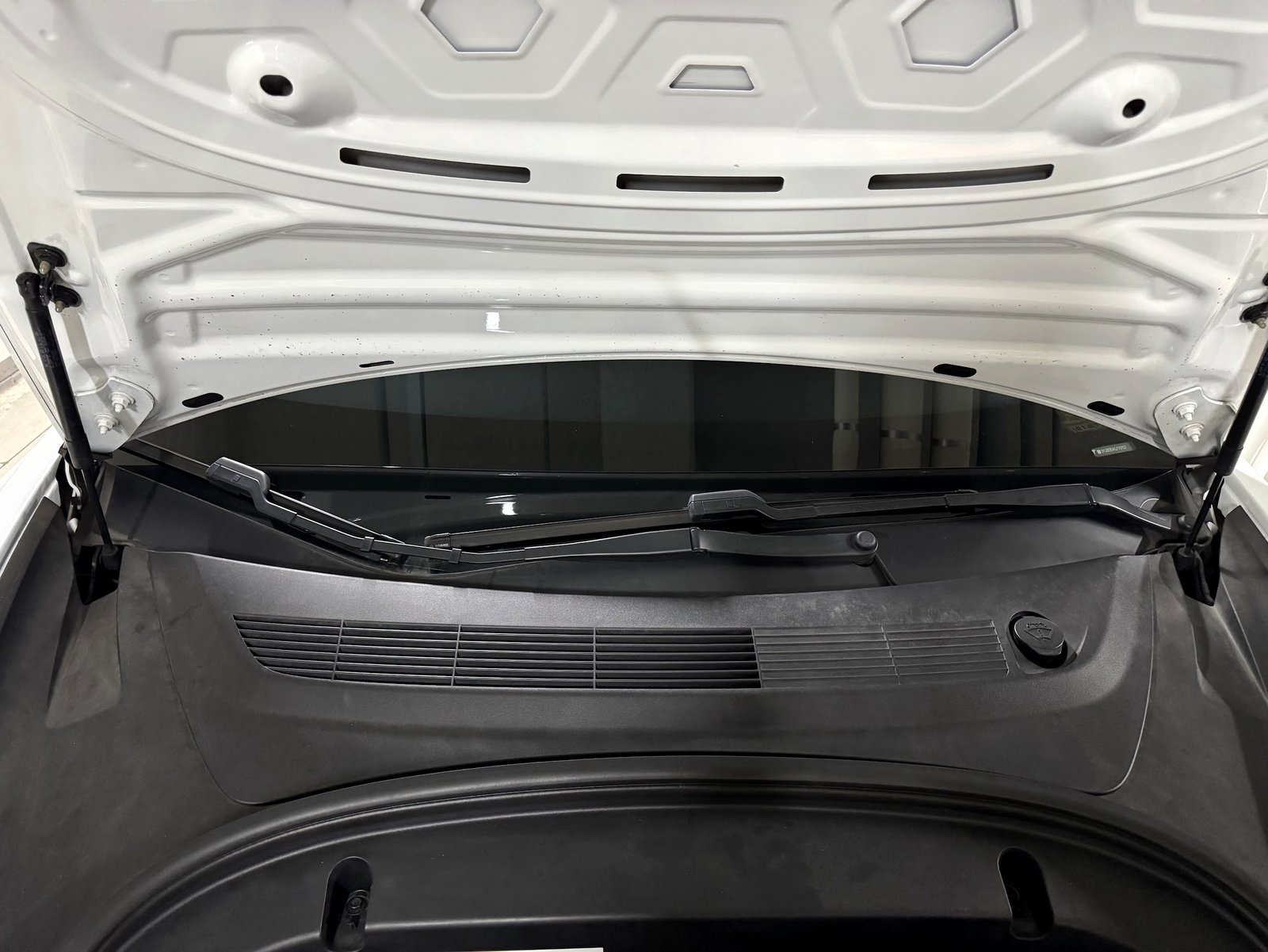
The replacement condenser took a few days to arrive. The car was still drivable, but the technician was very clear: do not turn on the HVAC climate system at all until the part is in.
Here is the reason. In an A/C system the refrigerant does two jobs. It carries heat, and it carries the lubricating oil that circulates through the high-voltage electric compressor. A ruptured condenser lets refrigerant escape and takes oil with it. Every time you switch climate on, the compressor tries to run on a circuit that is short of both. It loses lubrication and cooling and can overheat or wear internally. Tesla’s own service documentation states that when refrigerant has leaked, the compressor has likely run with little or no refrigerant and may be damaged internally, shedding debris into the system. In that case the replacement list grows to the compressor, the condenser, the discharge line and the desiccant bag.
That is the difference between my bill and the one I avoided. A condenser-only repair cost me about US$730. A starved compressor turns it into compressor + desiccant + line flush work on top of the condenser, and owners in that situation often end up past US$1,450. A few days without A/C was an easy trade.
On a heat-pump Model 3, “climate off” matters even more, because the same compressor also produces cabin heat. Asking for heat on those cars runs the compressor too. On my PTC-heater car, the instruction was just as simple: climate completely off.
So for several days I drove with climate completely Off and used only the heated seats. They are independent electric pads in the seat cushions and backrests, so they warm you without asking the HVAC compressor to run. If your windows start to fog and you cannot see clearly, pull over safely and clear the glass before you continue. Visibility comes before the repair bill. Ask your technician how to handle defogging before you drive away from the diagnosis.

Checks Before You Book Service (and What NOT to Buy)
1. Safe checks before service
- Record the exact alert time. Tap the alert (bell) icon and photograph the panel with VCFRONT_a447 and its timestamp. Note what climate was doing at that moment (A/C, heat, defrost).
- Check once after a parked reboot. In Park, do one scroll-wheel reboot, then turn climate on briefly. If VCFRONT_a447 returns right away, turn climate Off and leave it off. Repeating the reset will not fix the fault.
- Look at the lower front bumper opening. With a flashlight, look through the lower grille for an obvious rock strike, bent fins, a plastic bag or packed debris. Look only. Do not poke tools in, and do not touch high-voltage (orange) cables or refrigerant lines and fittings.
2. What NOT to buy
- DIY “A/C recharge” cans. Many auto-parts store cans contain stop-leak sealant or a generic oil blend. Tesla’s service documentation explains that the electric compressor’s lubricant has stronger electrical insulating properties than oil for belt-driven compressors. Using the wrong oil can affect the motor’s dielectric strength and cause an internal short. Tesla also specifies the oil by compressor type and warns against A/C flushing kits. A can will not seal a ruptured condenser anyway. It just adds refrigerant that leaks out, plus chemicals the shop then has to deal with.
- Cabin filters, as a fix for this alert. Filters matter for smell and airflow, and I cover that in my cabin filter DIY and odor fix guide. They have nothing to do with a refrigerant-side fault, so a new filter will not clear VCFRONT_a447.
3. Useful preventive and comfort options
- Check coverage first. In the Tesla app, scroll to Specs & Warranty to see what still applies to your car. If a road-debris strike caused the leak, ask your insurer whether your policy covers that kind of front-end damage.
- Read an itemized quote. Ask for the diagnosed part, labor (including radiator removal and reinstallation), and refrigerant recovery/recharge as separate lines. Ask whether the compressor was tested and found healthy.
- Consider a lower-grille mesh insert if you drive on gravel or debris-heavy highways. A removable mesh insert behind the lower bumper opening can help catch stones before they reach the condenser fins. Choose one that does not restrict airflow or interfere with the active grille shutter or sensors, and remove it if the installer or Tesla advises against it. Tesla itself lists a stone guard for some radiator assemblies in its service documentation, which shows how real this risk is.
If your problem is the opposite, with the heater blowing cold rather than the A/C blowing warm, and there is no VCFRONT_a447 on the screen, start with my no-heat / cold-air troubleshooting guide with 7 fixes to try. That guide also mentions this A/C repair as a separate case from the heating checks.
Frequently Asked Questions
Can I keep driving with VCFRONT_a447?
Mine was drivable for several days while I waited for the part, with climate completely Off as my technician instructed. The alert itself says cabin heating and cooling may be limited or unavailable. Make sure you can keep the windshield clear, and contact Tesla Service if other alerts appear alongside it.
Will a reboot or a two-button reset fix VCFRONT_a447?
A reboot can clear the message for a while, and that is it. If the alert comes back as soon as climate turns on, the fault is still there. One check is useful; repeated resets just invite you to run a damaged system again.
How much does a Tesla Model 3 A/C condenser replacement cost?
I paid roughly US$715–740 (converted from my local invoice) for the condenser, radiator removal and reinstallation labor, and the refrigerant recharge. If the compressor is damaged as well, the total can climb past US$1,450. Prices vary by country, service center and parts availability, so get an itemized estimate for your car.
Does VCFRONT_a447 always mean a bad condenser?
No. VCFRONT_a447 is a broad thermal-system alert. On my car the cause was a ruptured condenser. Other cars can trigger it with a sensor, valve, fan or other cooling component, and on heat-pump cars with parts specific to that system. Only a service diagnosis can tell which part is at fault.
Official References
- Tesla Model 3 Service Manual: Air Conditioning System Precautions (compressor oil, refrigerant leakage and compressor damage, recovery and recharge)
- Tesla Model 3 Service Manual: Condenser (Remove and Replace)
- Tesla Model 3 Service Manual: Fluids and Capacities (refrigerant by region, oil by compressor type)
- Tesla Support: Vehicle Warranty (Basic Vehicle Limited Warranty, 4 years or 50,000 miles)
— Volt Fix Garage
Leave a Reply